Long regarded as a niche trend, plant-based cuisine is now establishing itself as a major trend in the catering sector. It goes far beyond a mere fad to meet very real customer demands: changing eating habits, growing environmental concerns amongst the public, and a quest for food that is both healthier and more sustainable.
Customers, who are increasingly well-informed and discerning, expect culinary offerings that combine enjoyment, creativity and environmental responsibility. According to a CHD Expert study, 46% of customers want restaurants to offer plant-based options on their menus. Against this backdrop, chefs are being forced to rethink their practices, their sourcing and even the way they design their menus.
A new field of expression for chefs
Plant-based cuisine is not simply about eliminating animal products; it involves a genuine transformation of the culinary approach. Working with plant-based ingredients requires mastering specific techniques to bring out flavours, play with textures and structure dishes differently. The use of vegetables, pulses, grains and plant-based alternatives opens up a particularly rich field of exploration.
For chefs, it is also an opportunity to renew their creativity. Whereas animal protein traditionally provided the structure of a dish, plant-based ingredients invite us to rethink the dish’s overall balance. Unconventional combinations, precise cooking methods and original seasonings: every detail counts in delivering a complete culinary experience. This approach requires curiosity, technical skill and a capacity for innovation, whilst retaining the fundamentals of gastronomy.
In July 2025, the three-Michelin-starred restaurant L’Arpège, helmed by Chef Alain Passard, announced that its menu would henceforth focus exclusively on plant-based cuisine: a bold yet logical choice for a chef who has incorporated plant-based ingredients into his cooking since the start of his career.
It is interesting to note that plant-based cuisine is also a feature of the world’s leading culinary competitions: in the final of the 2017 Bocuse d’Or, the candidates were tasked with creating a plant-based dish.
A sustainable transformation of the food service industry
Beyond the creative aspect, the rise of plant-based cuisine is part of a wider transformation within the sector. Establishments – whether fine-dining, bistronomic or catering – are gradually incorporating plant-based options into their menus. It is no longer simply a matter of catering to specific dietary requirements, but rather of offering a fully-fledged alternative capable of appealing to a wider audience.
This shift is accompanied by a broader rethinking of practices: product selection, respect for seasonality, reducing food waste and promoting short supply chains. Plant-based cuisine is thus becoming a catalyst for building a more responsible culinary approach, in line with customers’ expectations.
For culinary professionals, this requires upskilling: understanding the properties of plant-based ingredients, mastering preparation techniques and knowing how to create a coherent menu have become key challenges. This transition cannot be improvised and requires tailored support.
Training to incorporate plant-based ingredients into your cooking on a long-term basis
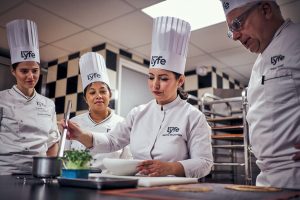 In light of these developments, executive education development plays a vital role. It enables head chefs, section chefs, cooks and kitchen assistants to acquire the knowledge and techniques needed to incorporate plant-based ingredients effectively and to a high standard into their work.
It is with this in mind that the ‘Plant-Based Cooking Techniques’ advanced training module offered by Institut Lyfe Executive Education has been developed. Designed as a four-day course, it aims to deepen participants’ knowledge of plant-based ingredients and help them master preparation, cooking and pairing techniques. The aim is to help professionals offer contemporary cuisine that is in tune with societal expectations, whilst maintaining high culinary standards.
More than just a passing trend, plant-based cuisine is now emerging as a sustainable evolution within the restaurant industry. Training in this field means anticipating tomorrow’s expectations and enriching one’s expertise to continue innovating.